While much of the U.S. residential market keeps waiting for the Federal Reserve to cut rates, Miami's "trophy" segment just proved it runs on a different clock. Between June 15 and June 21, 2026, 25 luxury contracts were signed for a total asking volume of $266.9 million, according to the weekly report from Douglas Elliman's Eklund-Gomes team, which tracks Miami-Dade listings above $4 million. The angle almost no one is covering: this isn't a story about celebrities buying mansions — it's a liquidity signal. The ultra-high-net-worth buyer isn't waiting for money to get cheaper, and that opens a concrete strategic window for international capital that's ready in cash. That's the read that sets this analysis apart from the rest of the coverage on Miami real estate investment.
What actually happened during the record luxury week?
The $266.9 million volume represented a jump of $130 million over the prior week, an abrupt move that confirms activity at the top is volatile and concentrated in bursts. Of the 25 contracts, 20 were single-family homes and 5 were condominiums.
The two properties that led the week were both waterfront single-family homes:
56 Bal Bay Drive (Bal Harbour) — $43 million sale: A 10,800-square-foot mansion with 7 bedrooms, 8.5 bathrooms, a pool, and 100 feet of frontage on the Intracoastal Waterway. Designed by NMD Nomadas and sold by Saber South CEO Michael Klinger, who had purchased it for $15.4 million in 2022. It closed $2 million below the $45 million asking price — the largest deal of the year in Bal Harbour.
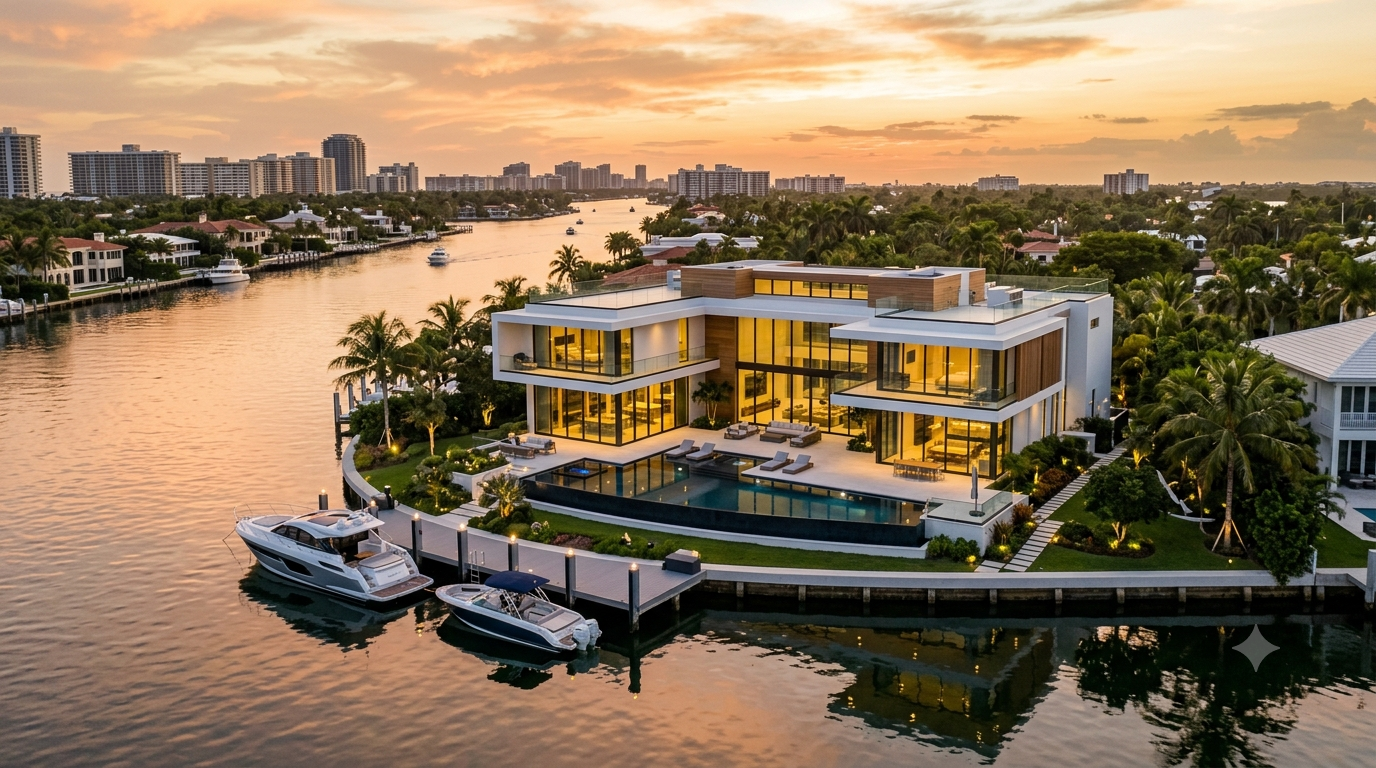
790 Lake Road (Bay Point) — $32 million asking: A 7,000-square-foot estate with 6 bedrooms, 7.5 bathrooms, a summer kitchen, an infinity pool, and a private dock, developed by ATR Concepts.
In the condo segment, the priciest to go under contract was a $10.5 million unit at 6800 Fisher Island Drive (Palazzo Della Luna Residences): 3,600 square feet, 3 bedrooms, 3.5 bathrooms, and wrap-around terraces, at $2,917 per square foot. It had been acquired for $6.1 million in 2021.
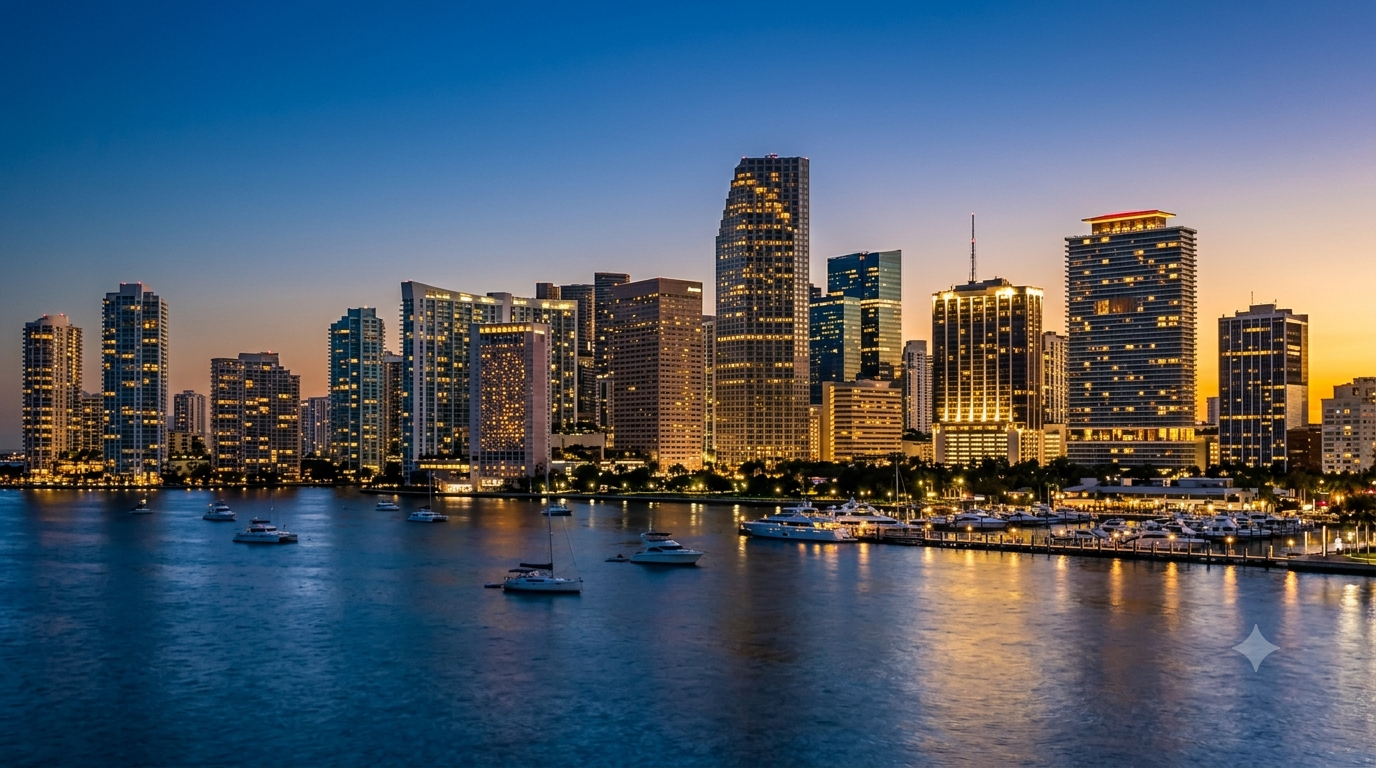
Why isn't ultra-high-net-worth capital waiting for rates to drop?
Here's the data point that matters most for an investor: Miami's above-$4-million segment is, overwhelmingly, a cash market. At the $10 million-plus level, the vast majority of transactions close without financing. That means the variable that paralyzes the average buyer — the mortgage rate — simply doesn't apply at the top.
The practical consequence is that the trophy cycle and the financed-market cycle have decoupled. When the middle-market buyer pauses because the monthly payment went up, the ultra-high-net-worth buyer keeps moving, because their decision hinges on asset quality, waterfront scarcity, and wealth protection — not on the cost of credit. The line that sums up the week is simple: ultra-high-net-worth money isn't waiting for prices or rates to fall.
For the Latin American or European investor arriving with liquidity, this reorders the logic of entry. You're not competing against leveraged buyers waiting for a Fed cut; you're competing against other equally decisive cash profiles. Speed and financial preparation are worth more than perfect market timing.
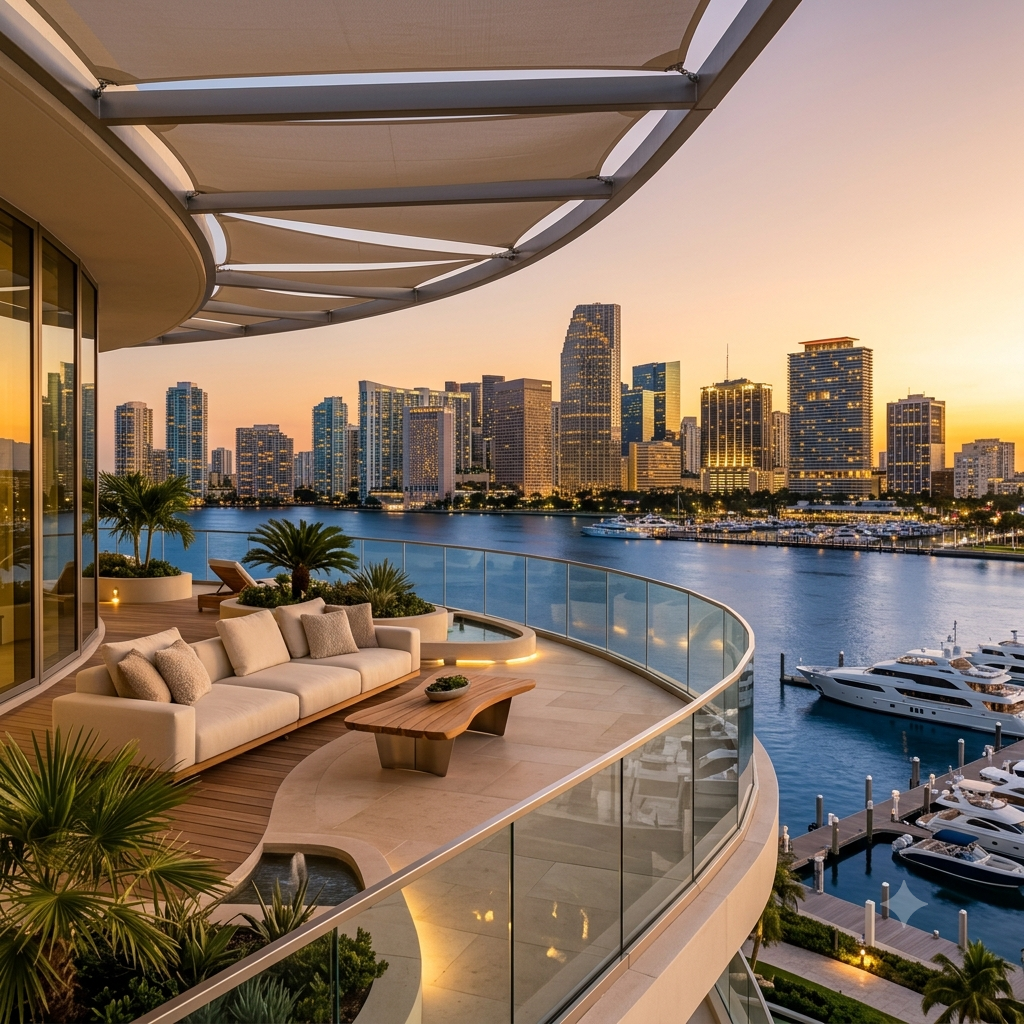
How much does it cost to enter the trophy segment, and where is it concentrated?
The week's numbers sketch a useful price map. Single-family homes averaged an asking price of $14.65 million, with a total volume of $132 million. Condominiums averaged $7.9 million, totaling $39.4 million. In other words, the luxury condo remains the relatively more "accessible" entry point to the trophy world compared with a waterfront mansion.
The geography is just as telling. Activity concentrated in enclaves of scarce land and waterfront: Bal Harbour, Bay Point, and Fisher Island. These are markets where supply is physically limited and where value holds precisely because no more coastal land can be manufactured. For anyone evaluating Brickell luxury condos or pre-construction condos in South Florida, the contrast is instructive: Brickell offers vertical density and a pipeline of branded towers, while these island enclaves offer horizontal exclusivity. Both theses work, but they answer to different investor profiles.
What does the pace of sales tell us about how to buy?
A detail that usually goes unnoticed: the properties that went under contract that week had been on the market an average of 119 days (109 days for single-family homes, 74 days for condos). In a euphoric "record" headline, that figure adds nuance. Trophy sells strong, yes — but it doesn't sell fast.
This carries a direct strategic implication for the buyer: at the top there's room to negotiate and time for diligence. The Bal Harbour mansion closed $2 million under asking. When a $45 million asset adjusts by 4–5%, the informed buyer's price discipline pays off. My read as an agent who works this market actively: in these enclaves, usable waterfront — 100-plus feet on the Intracoastal, a dock with no fixed bridges — is what truly sustains resale value; properties that look spectacular but have limited water frontage or navigation restrictions get adjusted far more at the negotiating table.
How should the international buyer position themselves in this window?
For the international investor, the record week confirms three things about real estate market trends in Florida in 2026. First, the top has real demand depth and doesn't depend on credit. Second, waterfront scarcity will remain the long-term appreciation engine. Third, the prepared buyer — with a legal structure, verified funds, and an advisor who knows the blocks, not just the buildings — holds a decisive edge over anyone improvising.
The winning strategy isn't to wait for a correction the trophy segment rarely offers, but to be ready to execute when the right asset appears. In a market where ultra-high-net-worth money competes for scarce inventory, preparation is the real "discount."
Frequently Asked Questions (FAQ)
Do ultra-luxury buyers in Miami really pay in cash? In the above-$4-million segment, and especially above $10 million, most transactions close without traditional mortgage financing. That's why interest rates influence the top of the market far less than the general residential market, and why trophy activity can stay strong even as the rest of the market cools.
Which is better for an international investor: a waterfront mansion or a luxury condo? It depends on the profile. A mansion in an enclave like Bal Harbour or Bay Point offers exclusivity, privacy, and scarce land, with entry tickets that averaged around $14.65 million in the week analyzed. A luxury condo — on Fisher Island or in Brickell towers — offers a lower entry point (averaging close to $7.9 million), less operational maintenance, and, in many cases, stronger rental potential.
Does a record week mean prices are about to rise? Not necessarily. High volume reflects liquidity and demand, but the 119-day average on the market and the price adjustments at closing (like the $2 million discount in Bal Harbour) show there's still room to negotiate. The record signals a healthy segment, not an imminent across-the-board increase.
Work with an advisor who knows the blocks, not just the buildings
In Miami's ultra-luxury market, the difference between a good buy and an excellent one is decided in the details: usable waterfront, the resale liquidity of each enclave, and price discipline at the negotiating table. At Inbest Partners, we guide local and international investors through every step — from deal structure to closing — with real knowledge of Brickell, the islands, and South Florida's waterfront enclaves. Reach out through the Inbest Partners contact page and let's talk about your next real estate investment in Miami.