A surge in wealth migration and commercial development has pushed land sales to levels not seen since 2020 — reshaping opportunity for commercial and residential developers across Miami-Dade, Broward, and Palm Beach counties.
Why South Florida Land Sales Are Surging in 2026
South Florida land sales have climbed to their highest point in six years, driven by two powerful and converging forces: sustained wealth migration from high-tax states and aggressive commercial development from institutional investors and private equity funds seeking land investment in Miami and surrounding markets.
Unlike residential property cycles, land transactions reflect true developer confidence. When institutions and developers commit capital to raw or semi-developed land, they are betting on long-term population growth, infrastructure expansion, and zoning upside — all of which are present today across Miami-Dade, Broward, and Palm Beach counties.
Wealth Migration as a Primary Demand Driver
Since 2020, South Florida has absorbed an outsized share of domestic migration from New York, California, and Illinois — households bringing both income and investment capital. This inflow has not only fueled residential demand but created ripple effects in the commercial land market in South Florida: more residents means more demand for retail, healthcare facilities, mixed-use developments, and last-mile logistics infrastructure.
For developers tracking land density opportunities in Florida, this migration trend is a structural shift, not a cycle. The net domestic migration into South Florida has been consistently positive for five consecutive years, providing a demand floor that protects land values even during credit tightening periods.
"Land density is the most compelling variable for developers entering South Florida today — the gap between permitted FAR and actual development remains wide in key corridors."
Commercial Development: The Engine Behind the Numbers
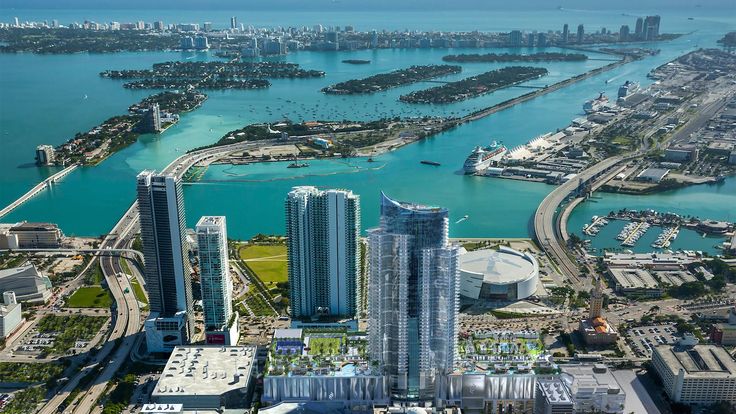
The current six-year high in South Florida land transactions is not purely residential. Industrial, mixed-use, and life sciences development are all contributing. The Port of Miami expansion, the expansion of Brightline rail corridors, and the continued repositioning of Wynwood, Doral, and Pompano Beach as commercial hubs have all created new land acquisition activity in submarkets that were previously overlooked.
Developers pursuing commercial land for sale in South Florida should note that competition is intensifying in the $5M–$30M range — the sweet spot for mid-density mixed-use development — with cap rates compressing in transit-adjacent zones.
Land Density: The Key Variable for Residential Developers
For residential developers, the opportunity in the current cycle lies in understanding land density in South Florida. Many parcels in Hialeah, Opa-locka, and northern Miami-Dade carry zoning allowances that have never been fully built out. As labor and materials costs moderate in 2026, the economic case for high-density residential on underutilized land is increasingly compelling.
Investors focused on residential land development in Miami should run detailed entitlement analyses before acquisition — existing zoning in many corridors permits FAR (floor area ratio) of 3.0 to 5.0, but most parcels are only built to 0.8–1.2. This gap represents latent density value that can be unlocked through rezoning petitions, variance requests, or master plan amendments.
Outlook: Is Now the Right Time to Buy Land in South Florida?
The six-year high in South Florida land sales 2026 signals that institutional and professional investors are moving early in the cycle. Historically, retail and smaller investors enter land markets 12–18 months after institutional activity peaks — meaning the window for favorable pricing is narrowing.
Key risk factors to monitor include rising insurance premiums in coastal zones, municipal approval timelines in Miami-Dade (which average 18–24 months for major rezonings), and the impact of any Federal Reserve rate changes on construction financing. Nevertheless, for developers with strong equity positions and long-term hold horizons, buying land in South Florida in 2026 presents a fundamentally sound proposition.
Key Takeaways for Developers and Investors
South Florida land sales are at a six-year high, driven by wealth migration and commercial demand. The opportunity is most acute for developers who understand land density economics and can navigate entitlement risk. The window for pre-institutional pricing is closing.